

1. Design and Prototype Development
Everything begins with an in-depth exploration of functionality and aesthetics. Our design team combines market trends with ergonomic principles to complete initial sketches and 3D digital models. Then, using 3D printing or CNC machining technology, functional prototypes are created for real-world testing to verify structural rationality, comfort, and durability. Based on the results, design adjustments are made to ensure the product meets both manufacturing feasibility and the rigorous demands of golfers.
2. Precise Cutting and Material Preparation
Once the prototype is confirmed, the process enters the batch production preparation stage. We use advanced laser cutting or CNC cutting bed technology to precisely cut selected main materials and accessories, such as high-density nylon and ballistic fibers. This process ensures high consistency and accuracy of all component dimensions, with errors strictly controlled within a very small range, laying a solid foundation for subsequent high-quality sewing and assembly.
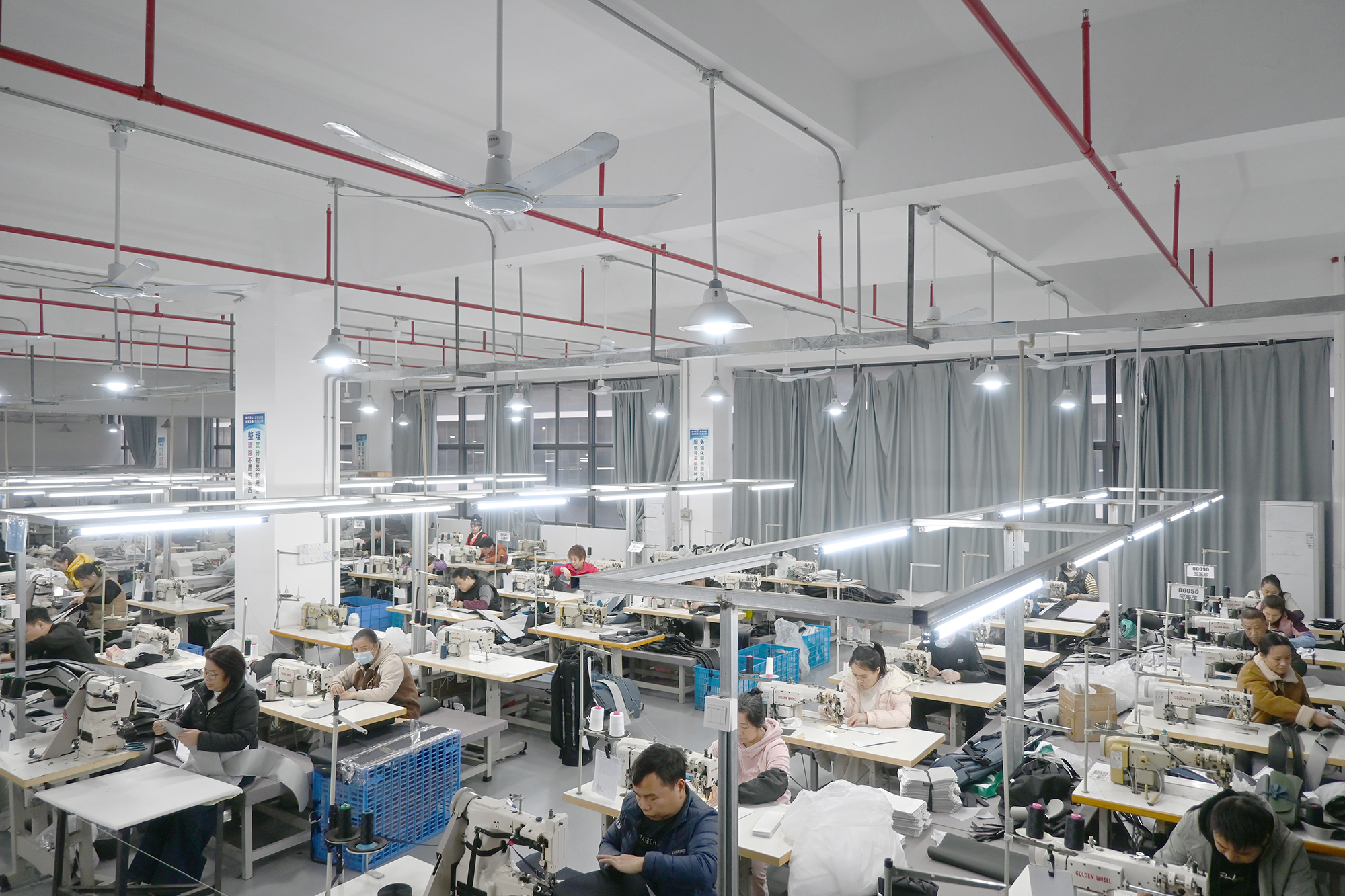
3. Sewing Assembly and Structural Formation
This is the core stage where scattered components are transformed into a complete golf bag. In this phase, skilled craftsmen use precision industrial sewing machines and follow reinforcement standards such as '3 stitches, 6 threads' to sew the cut materials. Key stress points, such as shoulder straps, handles, and bracket connections, undergo multiple backstitch reinforcements to ensure they can withstand long-term tension. At the same time, accessory components like the frame system, zippers, and pockets are accurately assembled into designated positions, forming the complete structure and functional layout of the golf bag.
4. Rigorous Quality Inspection and Functional Testing
Assembled golf bags must pass a series of stringent quality checks before entering the packaging stage. Our quality inspection team conducts a comprehensive 'health check' according to 28 internal inspection points. Key inspection areas include: whether the stitching is straight and firm, with no skipped or loose threads; whether all zippers and fasteners operate smoothly; whether the dimensions of all pockets and compartments are accurate; and whether the overall color is consistent. In addition, sample functional tests are conducted, such as simulated load-bearing tests and frame opening and closing fatigue tests, ensuring that every golf bag meets professional-level durability and reliability standards before leaving the factory.


 English
 +852-59059946
 +86 13823126453
 Customer Service
 jp@gbsports.com.cn